How I learned to love survival crafting again with Obsidian’s “Grounded”
Photos courtesy of Obsidian Entertainment
By: Joshua Ceballos
Back in 2020, at the height of the COVID-19 pandemic, my buddies and I — freshly sequestered with nowhere to be but online — got really into survival crafting games.
We cut our teeth on the usual classic: “Minecraft,” but we quickly moved on to slightly more modern genre entries like “Ark: Survival Evolved” and “The Forest.” These games were fun for a time, but I never really found myself aching to boot them up when I was playing on my own. In short, they were a good time with friends, but they never called to me on their own merits.
Eventually, I just thought they sucked ass.
When real-world survival became less of an imminent concern and we were allowed outside, I drifted away from the genre. My friends got busy with their lives and I was no longer content to play a game where most of my time was spent incessantly grinding for resources while avoiding any of the 20 different things that could kill me and set back my progress.
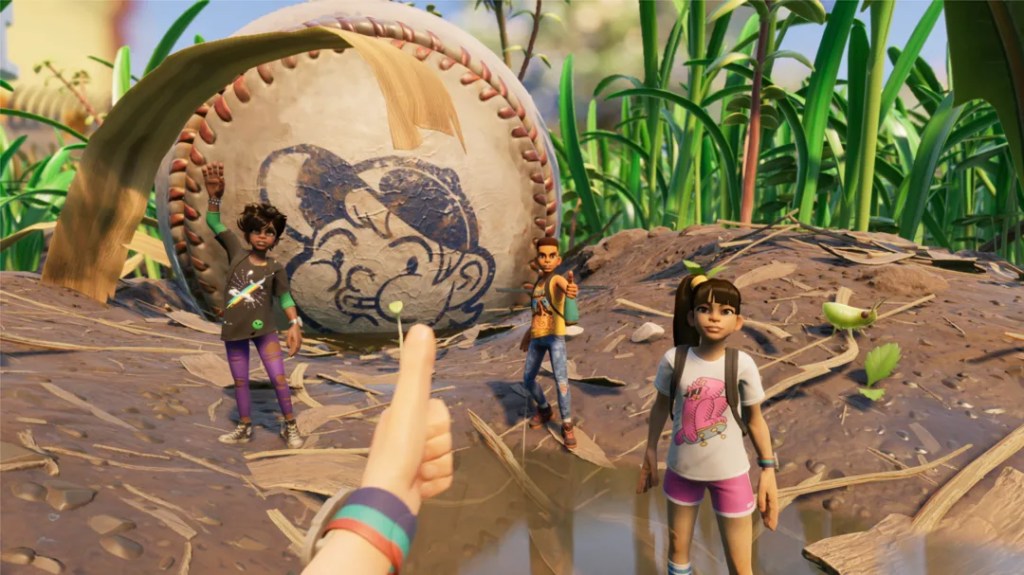
Until I started playing “Grounded,” Obsidian Entertainment’s “Honey I Shrunk the Kids-” inspired insect survival game.
Now I should say, Grounded actually came out during the lockdowns in July of 2020. At the time, though, it was a PC exclusive and I hadn’t made the leap to that section of the gaming world yet. It came out on Xbox consoles in 2022, but I didn’t get my hands on it until Microsoft made it cross platform this year.
For me, Grounded perfectly encapsulates what I think is a key factor in what makes survival crafting games fun: friction, applied correctly.
The point of a survival crafting game is to make the player feel weak, at first, then slowly build them up towards strength and dominance — not through a leveling or upgrade system, but through an ever-expanding stockpile of knowledge and resources.
That feeling of weakness is established by various means. Difficult enemy encounters, hunger and status management, the daunting prospect of exploring a new and hostile world armed with just a stick and a stone.

In short, friction. Friction between the player and the game’s various systems. Friction which, eventually, with effort and a good number of hours spent resource collecting and crafting, the player can overcome.
The problem with a lot of games in the genre, in my experience, is they enforce artificial friction with systems that are grating rather than properly challenging.
For instance: item durability. In a lot of survival crafting games, Minecraft included, tools and weapons will degrade pretty quickly, meaning you’ll need to craft multiples of each tool or have to frequently repair your toolset with limited resources.
Another source of artificial friction is resource scarcity. You make arrows for ranged combat, but the feathers you need to craft them are hard to come by and arrows break on use. As a result, you use your bow and arrow only on rare occasions.
Still another trope that’s somewhat abrasive is resource organization. You want to build an item or structure that takes a bunch of materials of various types, so you need to go digging through the 10 different chests and storage containers you have littered around your base.
This, I think, is where Grounded shines and stands above its predecessors in the genre. The game takes all of these little micro-issues that detract from the overall experience and smooths them out.
Item durability? Your tools have a super long shelf life and repairing them takes just one or two resources to get them to mint condition.
Resource scarcity? Most materials aside from the uncommon ones are pretty abundant and regenerate quickly in the environment, plus there are multiple ways to acquire the most basic ones. Arrows also have the added bonus of never breaking, so if you sink 100 of them into a single Wolf Spider to finally take it down, you can just pick them all back up and go slay the next one.
Even resource organization is a breeze. If you have a single stack of an item type in one of your chests, you can “hot drop” your carried inventory into the chest so it automatically vacuums up every stack of that item and organizes them accordingly. You can even hot drop your entire inventory to every chest in your base simultaneously, so if you have separate containers for items of different categories, they’ll all get sorted to their appropriate place without you having to interact with each chest. When it comes time to craft your items and structures, as long as you’re in your base, your workbench will automatically pull from the inventory in your chests so you don’t have to take up your personal inventory space.
Other little quality of life features include:
-Arrows and thrown items show up on your HUD so you never lose them. This has the added effect of letting you track down an enemy that you’ve hit by following the arrow indicator.
-Although you drop your inventory when you die, it doesn’t decay or disappear if you die multiple times.
-When you die, your armor and hot pouch items stay on you, so you don’t have to worry about crafting new weapons or clothes to go get your stuff back.
-You can drop customizable “trail markers” that let you set descriptive pins at points of interest around the map. They show up on your HUD unless you don’t want them to, in which case you can toggle their visibility from the map menu.
-You can have up to three hot pouch bars, so you’re not limited to just one suite of quick items to use on the fly.
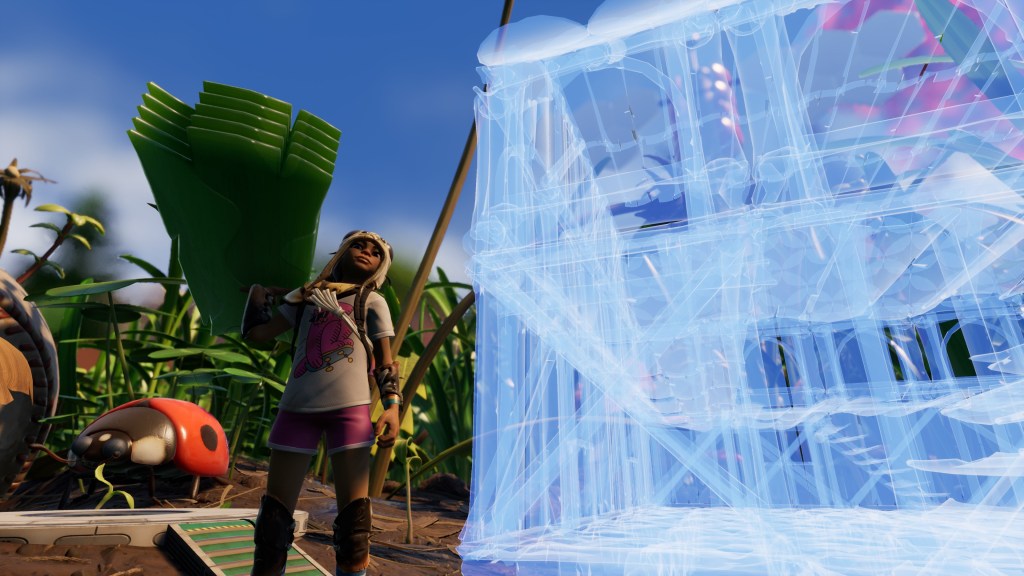
All of these little details coalesce into a single design philosophy that I find central to a lot of Grounded, and by extension, good survival crafting games: let the player have fun.
The gameplay loop doesn’t have to be so burdensome that it gets in the way of the player’s overall enjoyment.
If I’m working on my base and suddenly my axe breaks, and I groan because this is the third time it’s broken during this construction project and I’ll have to go risk life and limb to build a new one, that isn’t fun. The challenge should come from the actual gameplay, not the little in-between tasks.
In fewer words: the game should have friction, not grind.
I should also note that I’ve neglected to mention all the other things that make Grounded great, like the fun early 90s aesthetic, intriguing story, and the detailed and creative item design that makes every in-game structure look like it was actually made out of bug parts and grass.
All in all, Microsoft made an increasingly rare right move by bringing Grounded to all platforms, because it’s quickly become my favorite survival game and my reintroduction to loving the genre.
If you’re interested, you can purchase it here.
Find me on Twitter (X) @BarrelRollBlog_


 Barrel Roll
Leave a reply to Sannom Cancel reply